Merino wool or traditional wool? Differences and advantages
In the vast universe of men's knitwear, a silent debate accompanies every man at the time of purchase: is the sophisticated lightness of merino wool better, or the reassuring sturdiness of traditional wool? We often consider "wool" as a single concept, a generic term to indicate warmth and protection. However, for those who appreciate the art of dressing well, understanding the distinction between these two types of fiber is as fundamental as knowing the cut of a suit or the quality of a handcrafted shoe.
Sweaters by Il Lanificio are born from this conscious distinction. The choice of yarn is never accidental, but the result of a study that balances thermal performance, aesthetics, and tactile sensation. In this guide, we will explore the origins, technical features, and occasions of use that make merino wool and traditional wool two complementary pillars of contemporary elegance.
What is Merino Wool and Why is it So Valued?
Merino wool is not simply an alternative to common wool; it is a marvel of natural evolution. Coming from a specific breed of sheep—the Merino, whose selection has been perfected over centuries across the pristine expanses of Australia and New Zealand—this fiber is distinguished by a technical parameter invisible to the eye but perceptible at the first touch: the micron.
The Secret of Fineness
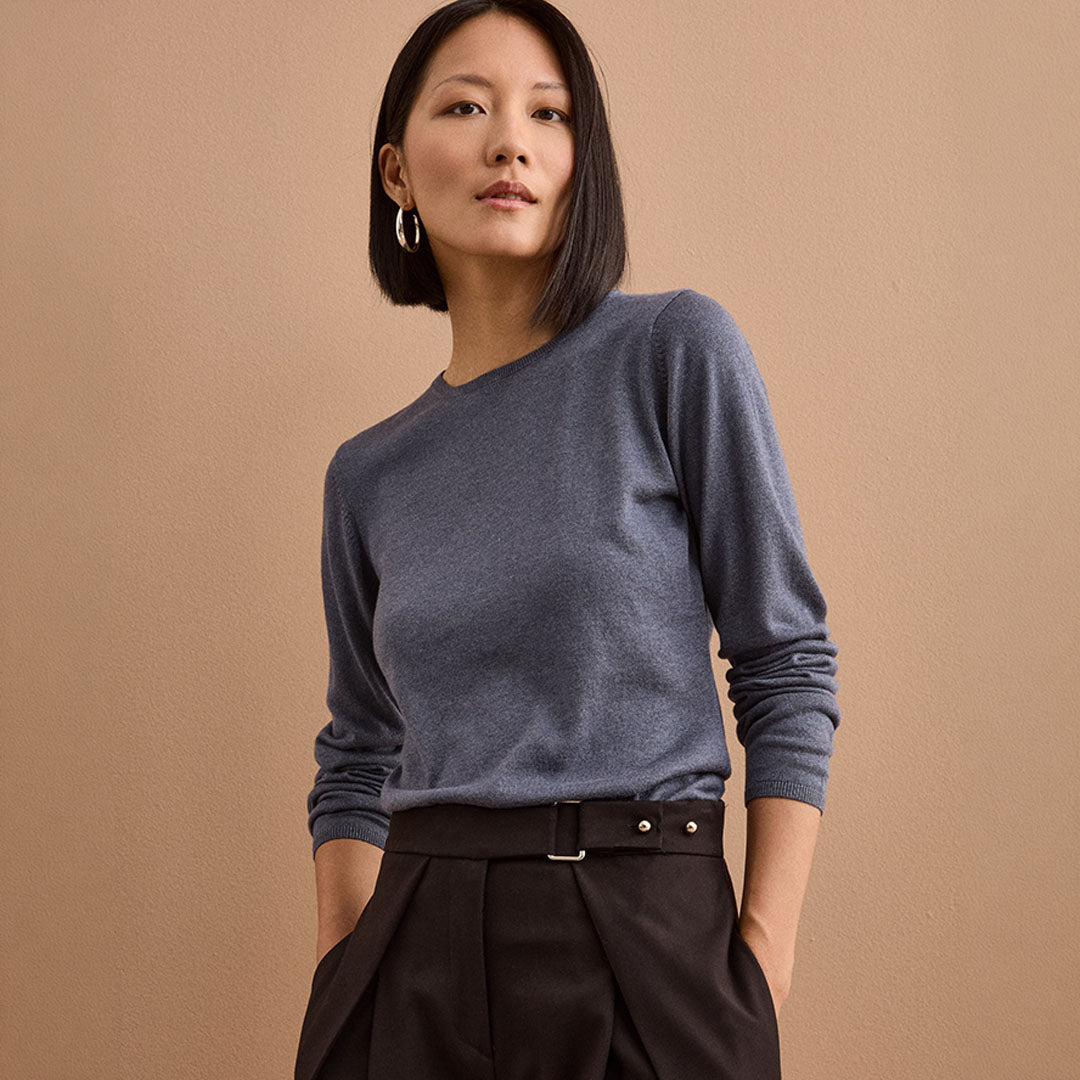
While traditional wool can have a diameter exceeding 30 microns, the merino wool used by Il Lanificio often drops below 19 microns (we are talking about Extra Fine Merino). To give an idea of the scale, a human hair measures about 70 microns. This extreme thinness is the reason why merino wool does not "scratch." Because the fibers are so fine, they bend gently against the skin instead of resisting. This makes it the choice fiber for garments worn directly against the skin, such as turtlenecks or crew necks, offering a silky feel that challenges common prejudices about wool.
Active Thermoregulation
Merino is a natural thermostat. Thanks to its complex molecular structure, the fiber is able to manage temperature spikes. When the body heats up, the fiber absorbs moisture vapor and releases it outside, cooling the skin through evaporation. Conversely, when the weather turns harsh, the microscopic crimps in the fiber trap warm air, creating an unbeatable insulating barrier. For the dynamic man moving from public transport to air-conditioned offices, a merino sweater guarantees constant comfort without the risk of overheating.
Traditional Wool: The Charm of Authenticity and Structure
If merino is the princess of fibers for fineness, traditional wool (often derived from European or crossbred sheep breeds) is the queen of structure. It is the wool that evokes Northern landscapes, evenings by the fireplace, and resistance to the most extreme elements.
Rustic and Textured Character
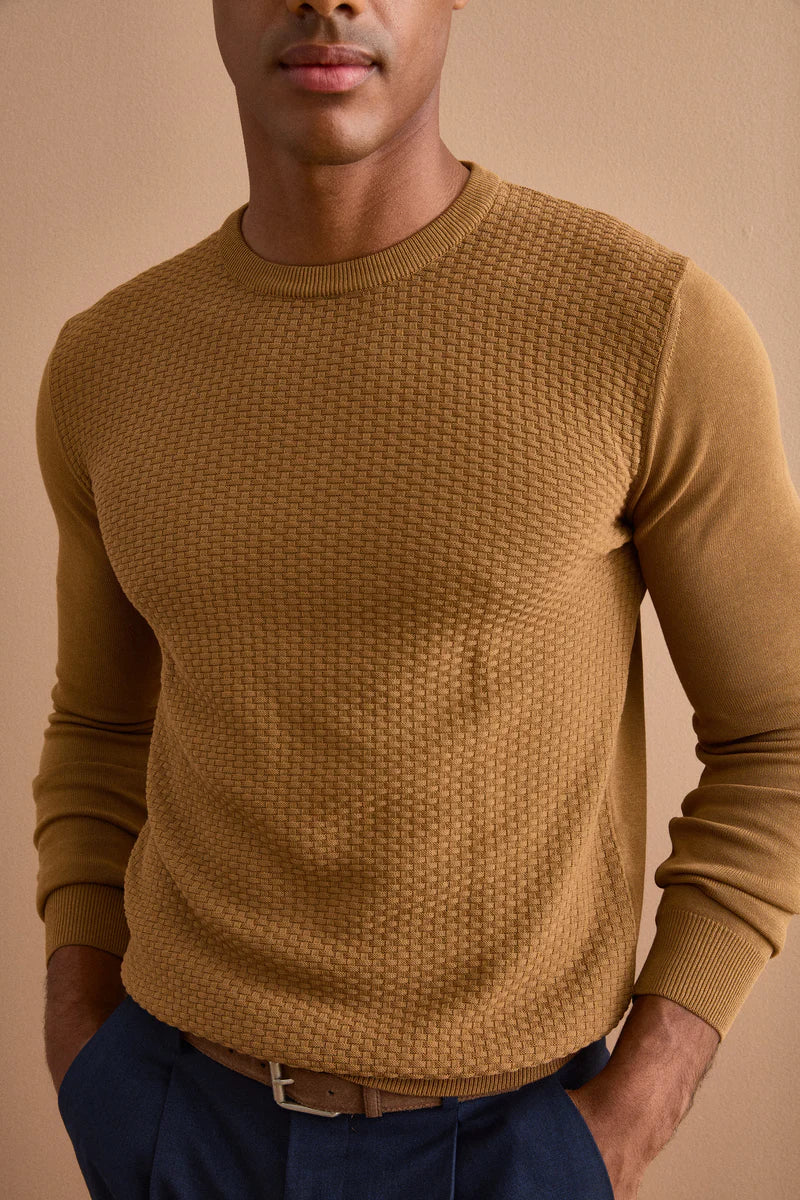
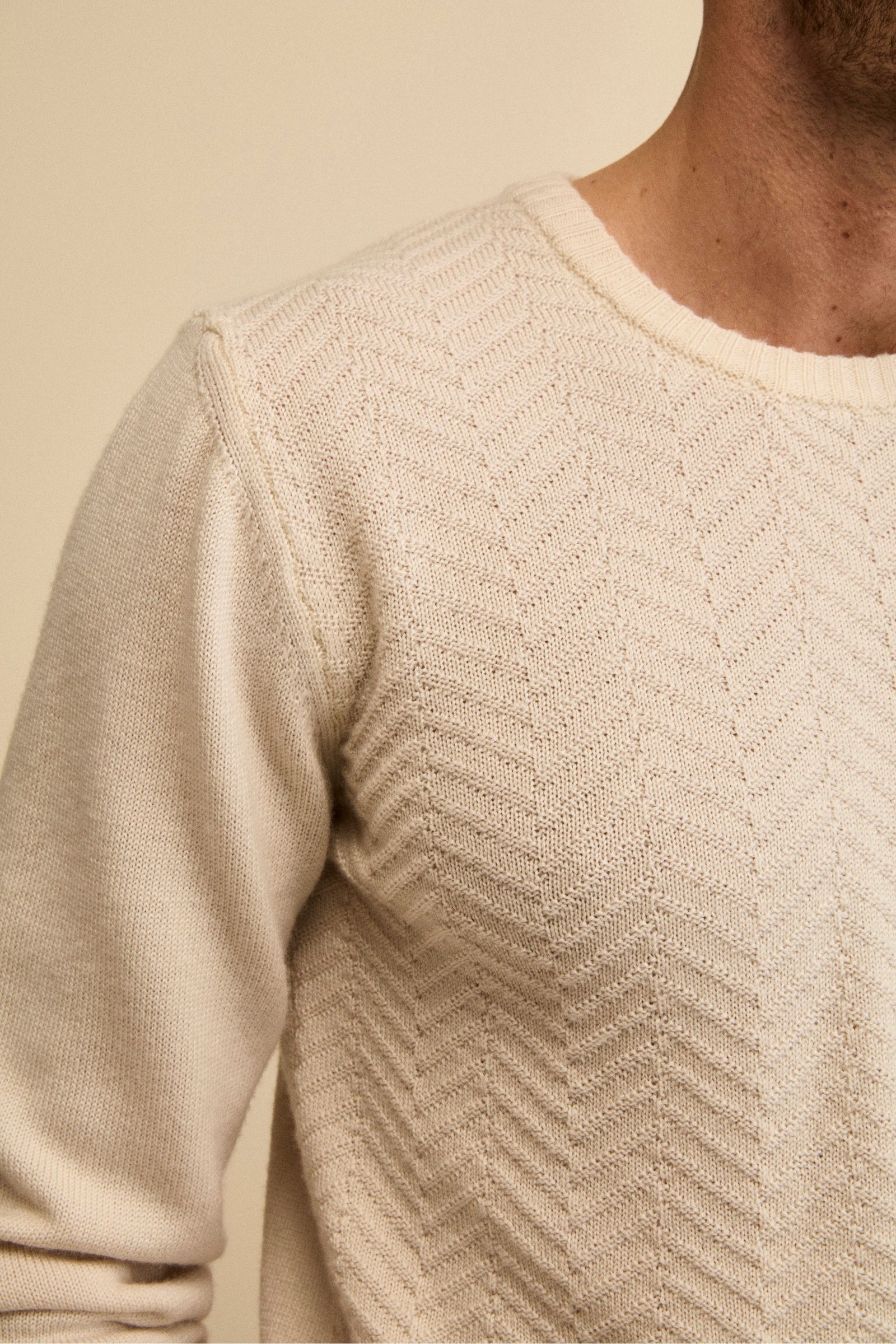
Traditional wool has a larger diameter, which translates into a more voluminous and solid yarn. This characteristic allows for the creation of those "textured" sweaters that define classic winter style. Think of cable-knit sweaters, Fair Isle patterns, or English rib knits: these structures need a fiber with body and shape memory, capable of supporting the design without sagging.

Resistance and Insulation
The main advantage of traditional wool lies in its durability. It is an extremely resilient fiber, capable of withstanding years of intense use without losing its insulating capacity. Traditional wool sweaters by Il Lanificio are designed to be "outerwear" garments, almost like small knit coats. Their density offers mechanical protection against the wind and damp cold that thinner fibers struggle to match with the same visual impact.
Men's wool sweaters: guide to choosing
Odor Management and Hygiene
An often underestimated aspect is the chemistry of the fiber. Both wools possess a protein called keratin that neutralizes the bacteria responsible for bad odors. However, merino wool, having a smoother surface, tends to trap fewer impurities. This means a merino sweater can be worn multiple times before needing a wash, making it the perfect ally for business trips where luggage must be optimized.
When to Choose One or the Other: A Style Guide
The choice between merino and traditional wool is not a matter of "better or worse," but of context and aesthetic language.
The Formal Look: The Dominion of Merino
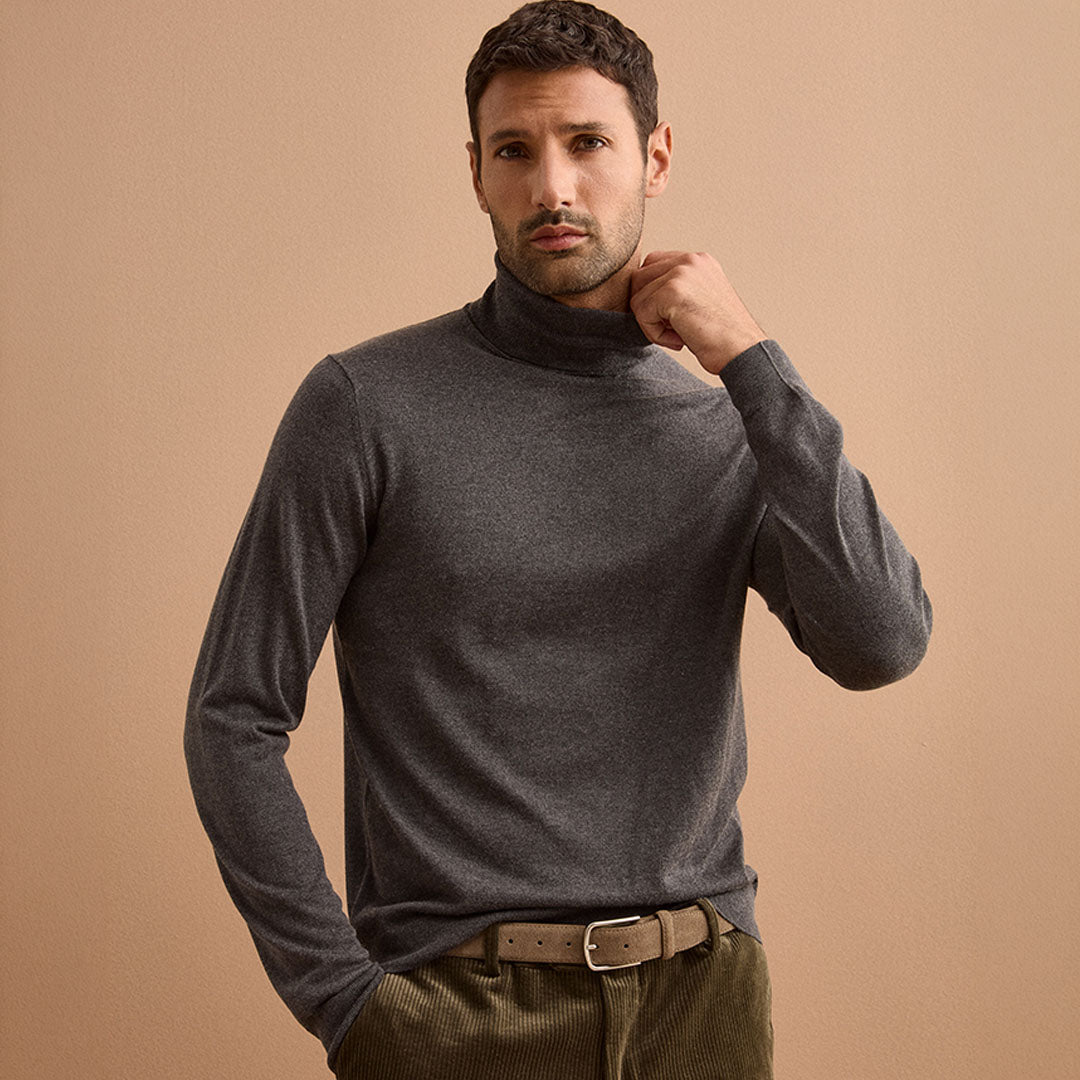
If your day includes meetings, institutional appointments, or dinner in a refined setting, merino wool is the answer. Its ability to drape perfectly on the body, without creating excessive bulk, makes it ideal under a blazer. An extra-fine charcoal merino turtleneck, paired with a light gray suit, communicates a sophisticated and confident modernity. It is the kind of elegance that doesn't need to shout to be noticed.

The Casual-Outdoor Look: The Return of Traditional Wool
On weekends, or during a trip out of town, traditional wool reclaims its throne. A virgin wool cable-knit sweater, worn over a flannel shirt, is the symbol of a timeless style that doesn't fear mud or light rain. It is an "honest" style choice that values texture and natural earthy colors, such as moss green, umber brown, or burnt orange.
The Craftsmanship of Il Lanificio: Where Fiber Becomes Art
Every garment bearing the Il Lanificio label is the result of a production process that respects the integrity of the raw material. Our selection of extra-fine merino wool does not stop at choosing the fleece; it continues into spinning, where fibers are carefully combed to eliminate any impurities and ensure a smooth, uniform hand feel.
For our traditional wool lines, on the other hand, we focus on enhancing texture. We use carding techniques that keep air inside the yarn, ensuring that even the most voluminous sweater remains surprisingly light to wear. In addition, many of our offerings blend merino wool with cashmere, creating blends that further elevate the thermal properties and softness of the final garment.

In a world that is rediscovering the value of slowness, wool emerges as the ecological fiber par excellence. Both merino and traditional wool are 100% biodegradable. A garment from Il Lanificio, if cared for attentively (hand washed, dried flat, stored with natural essences), can accompany a man for decades.
Buy less, but buy better: this is the mantra of the modern man. Choosing a high-quality wool sweater means reducing the environmental impact associated with the production of synthetic petroleum-derived fibers, which release microplastics with every wash and end up in landfills after just one season.
Wool is much more than a material; it is a bond with nature and with an artisanal tradition that Italy has been able to elevate to an art form. We invite you to experience these differences firsthand—to wear the lightness of a merino during your next business challenge or to let yourself be embraced by the warmth of a traditional wool during your next moment of relaxation.
How to wash and store wool sweaters and cardigans
Crew neck, turtleneck, cardigan: which one flatters you most