
Pinstripe Blue Suit: elegance and versatility of the most beloved color
The Timeless Allure of Pinstripes
From London’s financial district to Hollywood film sets, from the understated elegance of private clubs to today’s runways, the blue pinstripe suit has crossed more than a century of history without ever losing its aristocratic charm. Born as a dress code of the British elite, it has reinvented itself in every era, becoming a universal symbol of masculine elegance. The fine vertical stripes that glide across navy fabric are not just an aesthetic detail—they are a statement of intent: those who wear it project competence, reliability and the kind of confidence only true classics can convey.
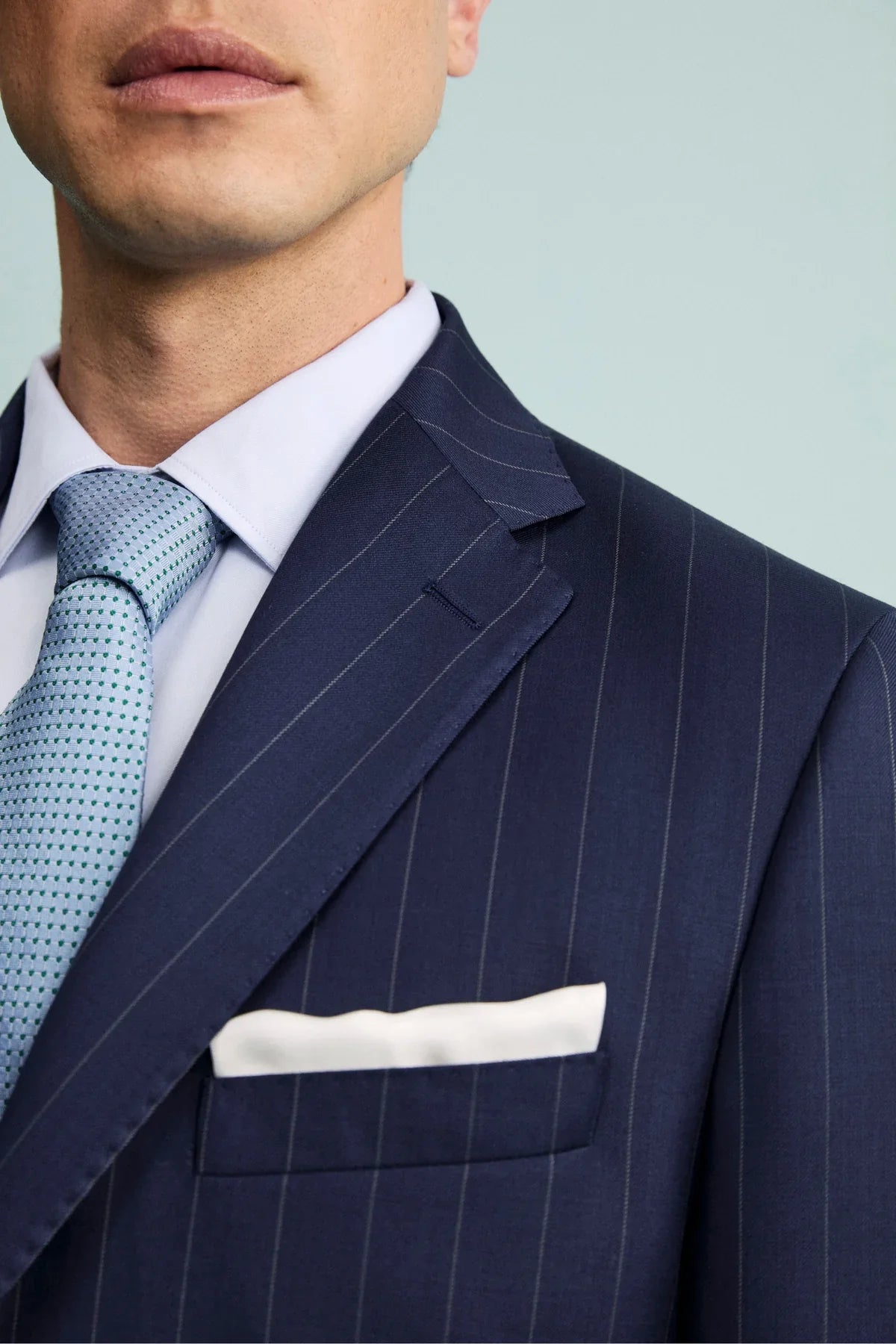
Among the most appreciated variants is the blue pinstripe: a perfect blend of tradition and modernity. Blue conveys trust and stability, while the vertical lines elongate the silhouette, adding authority. This article explores why to choose a blue pinstripe suit, when to wear it, how to pair it with shirts and ties, and which variations work best depending on the season.
Why choose a blue pinstripe suit
Authority and heritage
Wearing a blue pinstripe suit means embracing a long sartorial tradition. In the 19th century, pinstripes became the status symbol of London bankers, and during Hollywood’s golden age, stars chose them for their ability to express elegance and power. In the post-war years, figures such as Winston Churchill and the Duke of Windsor turned it into their signature style. The charm of pinstripes never faded: in the 1980s it was rediscovered by Wall Street brokers, and today it still represents professional success. Choosing the blue version means combining this heritage with the color that best communicates trust and professionalism.
Technically speaking, the pinstripe pattern is defined by vertical stripes that contrast with the base color. The verticality elongates and slims the figure, enhancing the wearer’s physique. Stripe thickness and spacing may vary: thin, close pinstripes create a sharp line and work well on lightweight flannels, while broader “chalk stripes” are typical of brushed flannels and are ideal for colder months.

In addition to the main versions (pinstripe and chalk stripe), there are less common “fancy” options such as rope stripes, made up of tiny dashes resembling twisted rope. Choosing a blue pinstripe suit means also evaluating these details: a classic, fine pinstripe is ideal for institutional contexts, while a more pronounced chalk stripe adds winter character. The suit may be single-breasted or double-breasted; in the latter case, the formal impact of the pinstripe is amplified.
When to wear a blue pinstripe suit
By nature, the blue pinstripe suit belongs to the realm of formal menswear. It finds its best expression in professional environments—high-level meetings, important interviews and any situation where authority must be conveyed through attire. Dress-code conventions classify it as a highly formal garment, perfect wherever competence and seriousness must be communicated.
In the world of ceremonies, the blue pinstripe suit also fits beautifully into daytime events. For morning or afternoon weddings, it offers a refined and distinctive alternative to classic navy or grey suits. In these contexts, opt for subtle color contrasts and avoid overly bold patterns that might dominate the look.
Its inherently business-oriented character makes it an excellent choice for congresses, conferences and corporate gatherings, where first impressions can shape outcomes. However, when the evening calls for black tie, pinstripes give way to the classic black tuxedo—every garment has its moment, and recognising these boundaries is part of true sartorial elegance.
How to match a blue pinstripe suit
A blue pinstripe suit truly shines when paired correctly with shirts, ties, shoes and accessories. Here are the key guidelines.
Shirts: White, Light Blue or Pale Pink
A white shirt is the ideal partner for a blue pinstripe suit, creating a crisp contrast that enhances its sophistication. Alternatively, a light-blue shirt softens the ensemble while remaining elegant. For a more creative touch, a pale-pink shirt works well, especially in spring or in less formal contexts. Avoid shirts with stripes of the same width as the suit’s stripes: always alternate stripe sizes. If the shirt features fine stripes, the tie should have wider stripes or a different pattern to avoid visual overload.
Tie and Pocket Square: Subtle but Expressive
The tie must match the formality of the fabric. Small geometric motifs or regimental stripes—provided they differ in scale from the suit—work perfectly. Ideal tie colors include burgundy, cobalt blue, light blue, bottle green and softened mustard. Solid grenadine silk ties add texture without introducing a new pattern. For the pocket square, you may add a complementary color (such as burnt orange) or choose a paisley pattern that echoes the tie’s tones. Remember: the pocket square should never be identical to the tie.

Shoes and Belt: the Detail that Matters
Pinstripes require formal shoes. Black is the most classic option, but dark brown also works well when seeking a slightly softer look. Some modern tailors pair blue pinstripes with cognac or tan shoes, though only in semi-formal settings. The belt should always match the shoes; a woven brown leather belt will echo dark-brown footwear. In very formal contexts, suspenders can replace the belt for an even more polished result.
Accessories: Cufflinks, Watch and Overcoat
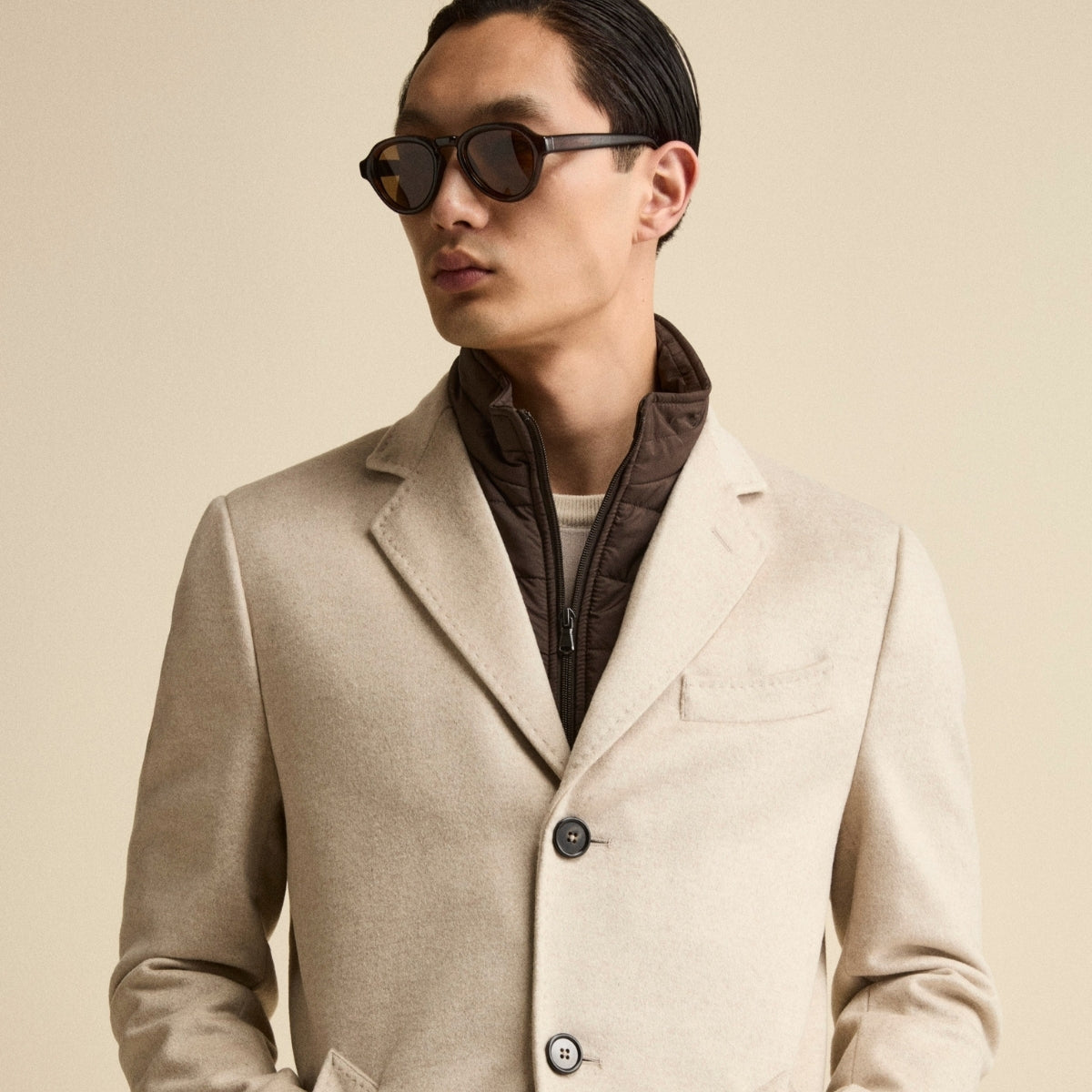
Accessories complete the look. Silver or mother-of-pearl cufflinks add refinement without excess. The watch should be slim, with a leather strap. In winter, an elegant overcoat creates a sophisticated contrast with a blue pinstripe suit; alternatively, a dark blue or charcoal overcoat is always appropriate.
Seasonal Variations: Fabrics for Every Season
Spring and Summer
Lighter fabrics—such as Caravelle, silk or linen blends—are recommended for warm seasons. Thin stripes on breathable fabrics maintain the elongating effect without adding weight. Blue can be rendered in lighter shades to suit summer brightness. Cotton or linen shirts and lightweight silk ties complete the look.
Autumn and Winter
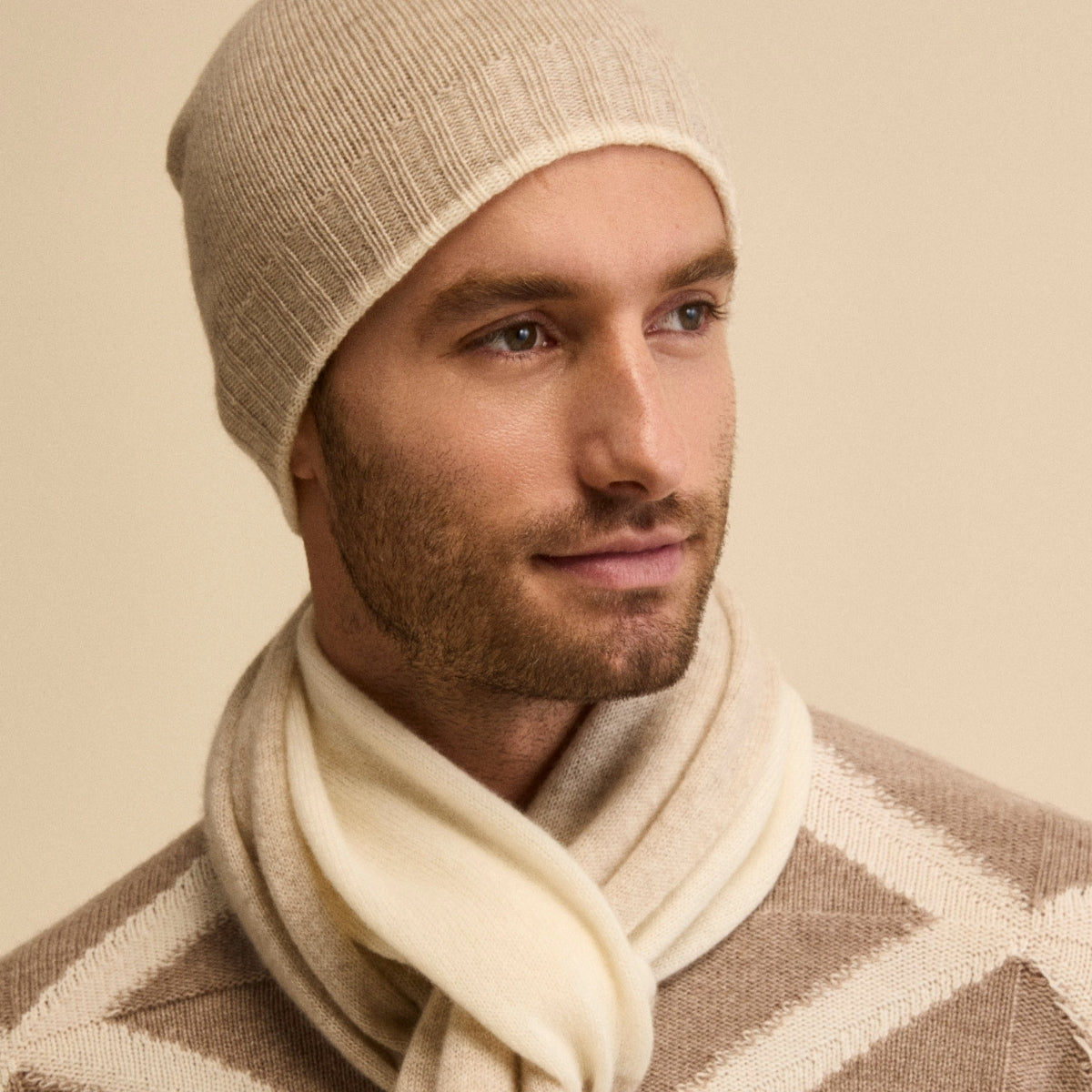
For cold seasons, wool pinstripes are unbeatable. Blue deepens into navy or midnight, pairing beautifully with cotton shirts and wool ties. For harsh temperatures, a double-breasted model adds warmth and increases the formality. A camel or dark-grey cashmere overcoat, paired with leather gloves and a cashmere scarf, completes the ensemble.
Style Tips and Mistakes to Avoid
-
Never break up a pinstripe suit: jacket and trousers should always match; pinstripes are inherently formal and not meant for mix-and-match outfits.
-
Always wear a tie: a pinstripe suit requires a tie to maintain its elegance; without it, the look feels incomplete.
-
Avoid sneakers and casual shoes: footwear should be black or dark brown; darker shades are preferable for formal settings.
-
Watch the patterns: never pair a shirt or tie with stripes the same width as the suit; vary spacing or choose different motifs.
-
Choose the right shade of blue for your complexion: lighter complexions work well with brighter blues or high-contrast stripes; darker complexions pair beautifully with midnight blue.
A blue pinstripe suit blends the power of blue—symbol of trust and professionalism—with the elegance of vertical lines that elongate the silhouette. Today, wearing a blue pinstripe suit means stepping into a tradition with awareness. The key to mastering it lies in pairing it wisely: white or light-blue shirts, refined yet expressive ties, formal shoes and discreet accessories. Whether for a business meeting or a daytime ceremony, the blue pinstripe suit remains a cornerstone of menswear, capable of uniting classic heritage with contemporary style.